
Progress for Pronghorn along U.S. HWY 212
Guest Writer: Andrew Jakes – Wyoming Migration Initiative
The end of the day was coming quick as dark storm clouds rolled in from the West. Larry Sickerson and I waited in our rig to see if the storm would pass before the sun went down. Twenty-five minutes of torrential downpour later, we decided to call it. It was a Thursday in late March, and we had been working between rain clouds all day. It was the last day that our team had given ourselves to deploy the remote cameras along the stretch of U.S. HWY 212 with newly rebuilt wildlife-friendlier fence, just outside Hammond, MT. Throughout the week, we observed piles of pronghorn – four does here, a herd of twenty there, another dozen over there – moving up and over the flats just adjacent to the highway.
Thanks to a building partnership between North American Pronghorn Foundation (NAPF) and others, including private landowners, US Bureau of Land Management, Montana Department of Natural Resources & Conservation, Montana’s Outdoor Legacy Foundation, Montana Fish, Wildlife & Parks (FWP), Montana Department of Transportation (MDT), Wyoming Game and Fish Department (WGFD) and Wyoming Migration Initiative, trust was established, and funding was appropriated to replace previously impermeable woven wire fencing with a wildlife-friendlier fence.
Previous to this effort, much of U.S. HWY 212 from Broadus, MT East to the Wyoming border, was notorious for being a nearly complete barrier to pronghorn movements. This was confirmed by two separate studies from FWP and WGFD that fitted female pronghorn with GPS collars, which tracked their daily and seasonal movements. As a result, this partnership looked to reestablish opportunities for pronghorn to successfully negotiate the U.S. HWY 212 transportation corridor, all while keeping motorists safe. Since this past fall, 5.25 miles of woven wire fencing were removed on either side of the highway (10.5 miles total) and replaced with MDT’s new Modified Farm Fencing that followed wildlife-friendlier specifications (i.e., 4 strand, 18” bottom height with smooth wire, 42” top height). To ensure motorist safety, the fencing parallel to three ‘no passing zones’ along this stretch of highway remained non-wildlife friendly by setting the bottom wire lower to minimize pronghorn crossing where driver visibility is lower. Now the task at hand is to monitor the effectiveness of this fence rebuild and assess if wildlife-friendlier fencing can be a tool, used in certain situations, to allow safe passage by wildlife across a transportation corridor. We accomplished this by setting up eleven sets of paired remote cameras – one on either side of the highway – to monitor pronghorn behavior, movements and use along the new right-of-way fencing.
Our monitoring team consists of Ryan DeVore with FWP, Larry Sickerson with MDT and me. Upon arrival in Broadus, MT that Monday and Tuesday, the three of us were able to identify optimal locations to deploy cameras, to purchase the remaining required equipment and ensured that the cameras were programmed and could be fashioned to metal pipes properly. Wednesday was an ideal day for outside work - partly sunny, cool and dry. Thanks to the efforts of MDT’s Broadus-based maintenance crew and their expertise using a hydraulic post pounder mounted on a skid steer loader, we set twenty 8-ft long sticks of drill stem (pipes) driven into the ground, each to a depth of 3 feet, in one day. These pipes aren’t going anywhere! The three of us and FWP’s Jacoby Long, started our work, trailing behind the maintenance crew’s efforts. Our duties were to secure cameras on the metal pipes and position them so that any wildlife movement would be captured successfully. We also adjusted any bottom wires up to comply with required height specifications of the design (18”) or down to repel crossing opportunities along ‘no passing zones’. These duties accounted for two days of solid work, with many hours of testing the triggering sensitivities of each camera.
By the end of Thursday with on and off rain, we had deployed most of the cameras, with Ryan graciously installing the remaining cameras the following week. That day we stood along the transportation corridor, assessing our work, and tried to poke every hole we could in our efforts before we felt comfortable enough to leave. We wondered, would pronghorn start scooting under the modified fencing and use it as safe passage to reach the other side of the highway? If so, how long would it take for them to find the permeable fencing? Finally, would there be any indications of increased or decreased risks to motorists?
Approximately two months after deployment, the initial results are promising, and we have the following to report: Our first confirmed photograph of pronghorn crossing occurred just days after installment on April 5, 2026 (see photo below).
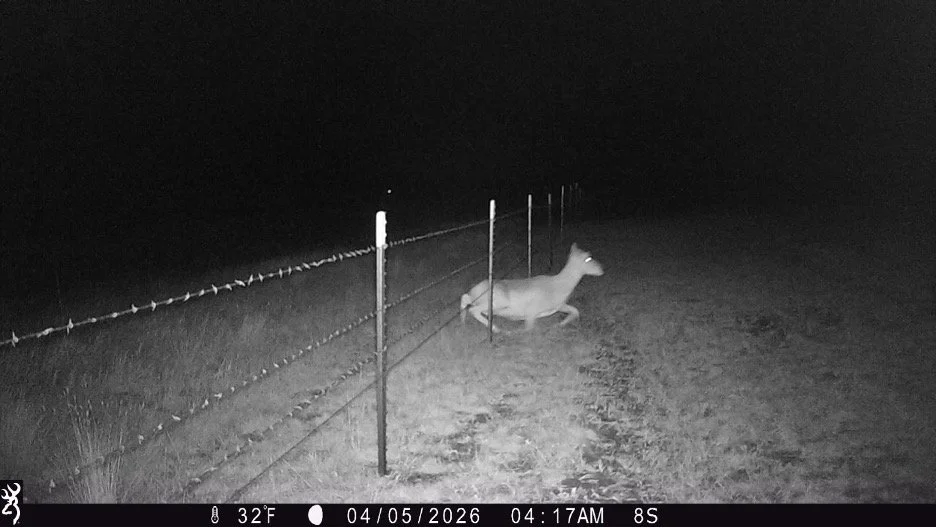
Our first confirmed pronghorn crossing the wildlife-friendlier fence, into the U.S. Highway 212 right-of-way. This successful crossing occurred just days after the remote camera was deployed.
Though we do not have confirmed evidence from the trail cameras of an individual crossing into the right-of-way fence on one side of the road and then crossing out of the right-of-way fencing on the other side of the road, we do have plenty of images of animals moving under fencing either to enter or leave the highway right-of-way. In addition, we have reports of people observing pronghorn successfully cross the highway within the project area. There also have been no reported accidents or carcasses removed by MDT maintenance crew within the study area, nor any other physical indication of any animal vehicle collisions (AVC) on this roadway stretch that in 2025, had an average annual daily traffic volume of 2363 vehicles a day as measured by MDT.
This monitoring effort will last for a year to capture potential seasonality differences by pronghorn and other wildlife. A University of Montana student has been recruited to assist in photo processing and will be cataloging the varying pronghorn behaviors, movements and use associated with the new right of way fences. We look forward to sharing frequent updates with NAPF members and anticipate that this type of effort can be another tool in the toolbox for effective wildlife conservation and management. - Andrew Jakes
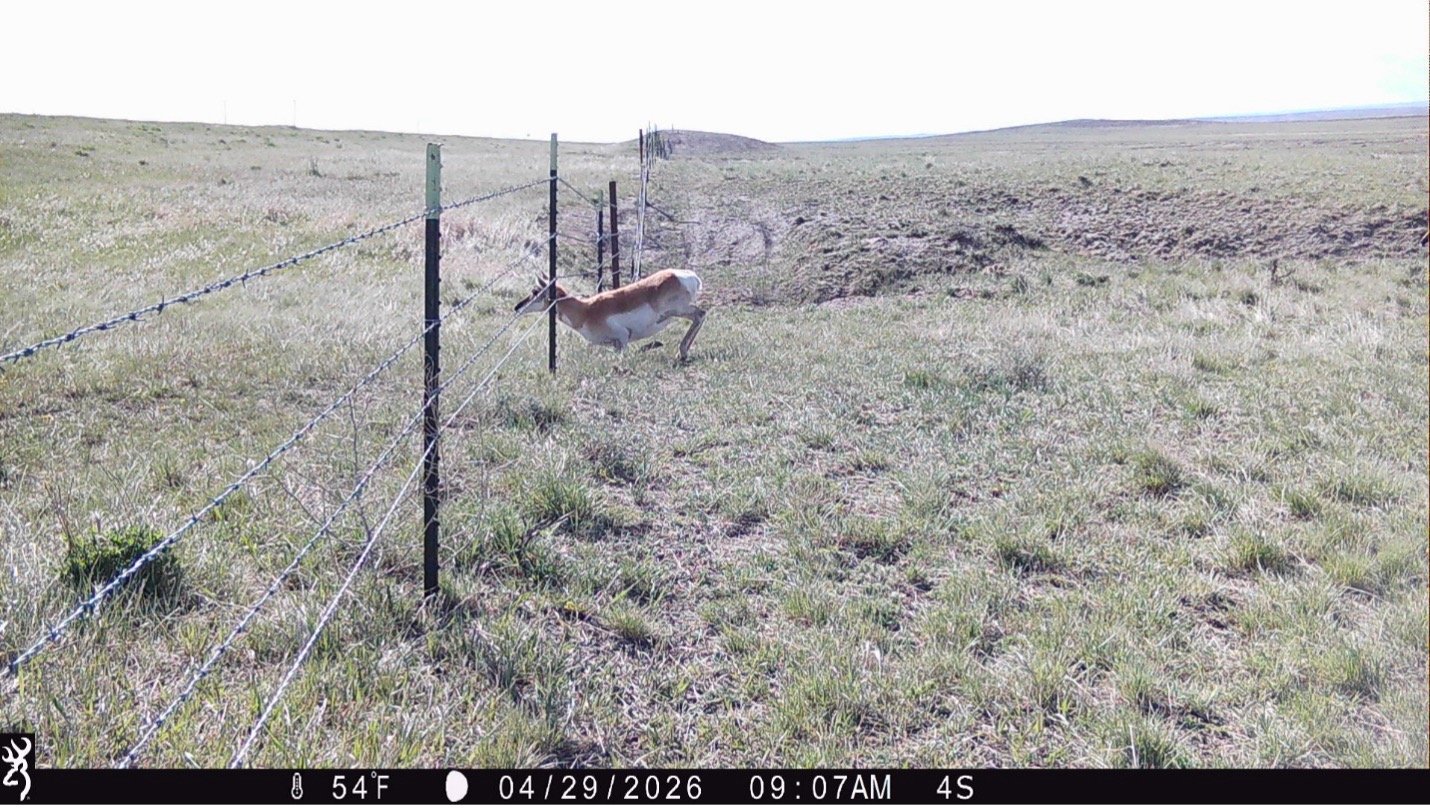
A female pronghorn assessing the newly rebuilt wildlife-friendlier fencing along the U.S. HWY 212 transportation corridor. She is moving from south to north, into the highway right-of-way. Pronghorn are highly vigilant and in the next frames, this individual turns back into the pasture as oncoming traffic is identified.